
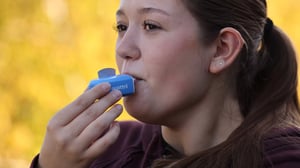
Cambridge Healthcare Innovations (CHI) today announces a significant milestone regarding its Quattrii dry powder inhaler platform: the availability of medical-grade clinical devices for immediate pharmaceutical evaluation. The availability of clinical Quattrii devices challenges pharmaceutical companies to rethink which biologics and other high-value medicines could be delivered by inhalation.
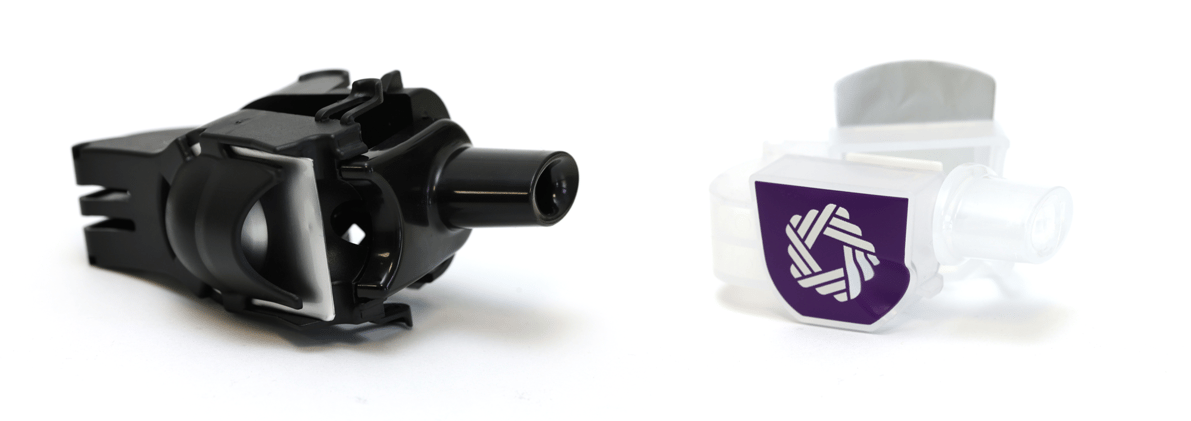
Quattrii clinical devices are available for immediate pharmaceutical evaluation
Existing inhalers on the market were designed for delivering much smaller doses. However, the Quattrii platform is designed to meet the demands of inhaled biologics, peptides and other large molecules by accommodating fill capacities of between 15 mg to 150 mg in a single sealed moisture-proof foil blister. This means that pharma companies can offer their medication to patients in a single inhalation, knowing that their valuable drug is protected from moisture right up until the point of inhalation. Plus, Quattrii is subject to multiple new patents, offering nearly 20 years protection for combination products.
Is your inhaler limiting your pipeline? CHI is inviting pharmaceutical companies to evaluate Quattrii before their next dose or device decision, particularly where powder loss, moisture sensitivity, limited dose capacity or repeated inhalations are constraining the product they want to develop. The aim is to establish whether a different delivery platform changes those limits for their own formulation.
Every milligram of drug left behind has already been paid for. For developers of expensive medicines, efficient aerosol delivery minimises the amount of valuable formulation needed for each dose. Quattrii was developed to efficiently disperse and aerosolise cohesive powders using the patient’s inhalation energy, with an engine that can be tuned to the formulation.
Start clinical development before the commercial device design is complete. Quattrii’s aerosolisation engines can be incorporated into different device designs while retaining the core aerosolisation technology evaluated during early development. This can reduce the need to change inhaler platforms later in development, with aerosol performance verified as the design evolves.
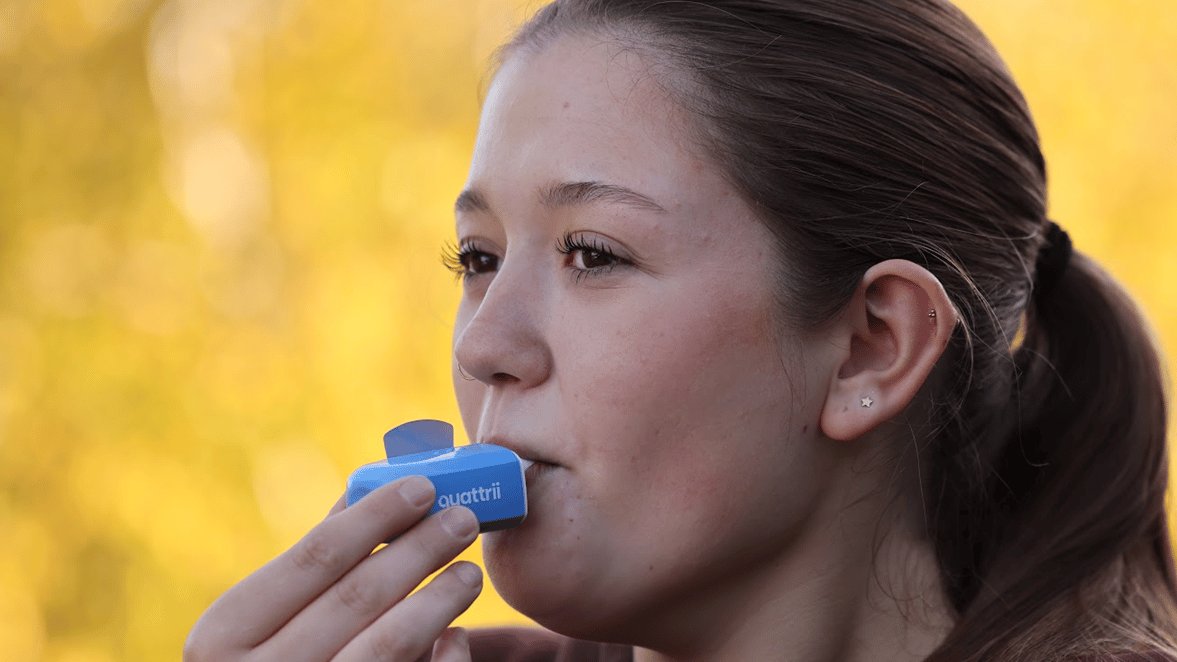
Quattrii’s aerosolisation engines can be incorporated into different device designs while retaining the core aerosolisation technology
David Harris, co-founder and CEO of CHI, said:
“The molecules have changed. Now there is an inhaler platform designed for them. We are encouraging pharma companies, big and small, to send us their toughest powder.”
One platform with two aerosolisation engines
- For carrier-free formulations, Quattrii separates powder storage from the most demanding deagglomeration work. The foil blister holds and protects the dose; the powder is extracted during inhalation and dispersed and aerosolised downstream. Formulation-specific tuning is controlled in one simple moulded engine component. CHI reports clearance of more than 90% of the fill mass for carrier-free formulations. In recent laboratory testing with a spray-dried biologic placebo, Quattrii produced fine-particle doses of approximately 5–35 mg across fill masses of 18–72 mg at pressure drops of 2 and 4 kPa. The study reported fine-particle fractions above 50%, measured using an adapted cascade-impaction method.
- A second engine supports carrier-based formulations, separating fine API particles from the coarse carrier while retaining nearly all the carrier within the foil blister, effectively ‘classifying’ the powder. This reduces the amount of carrier deposited in the patient’s mouth and throat, improving patient tolerability of large powder doses. In recent laboratory testing of a 15% w/w blend, CHI reports Quattrii carrier-based devices achieving classification of at least 85% (only releasing less than 15% of the carrier fraction) at fill masses of 100 mg. Furthermore, a study reported fine-particle fractions above 50%, measured using a standard cascade-impaction method.
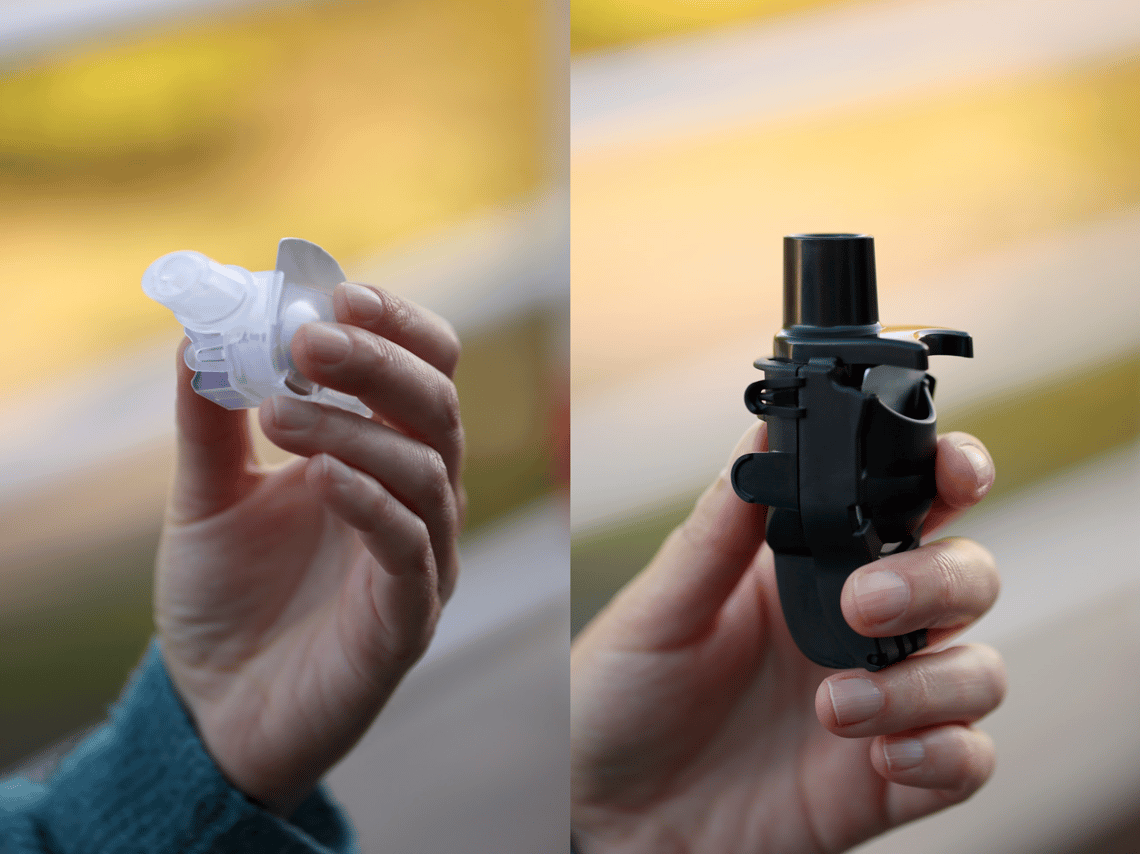 Left: Quattrii carrier-free clinical device; Right: Quattrii carrier-based clinical device
Both engines can be incorporated into different device designs. The impact of this is that pharmaceutical companies can qualify performance and in parallel design an inhaler that meets the needs of the target patients. Device performance doesn’t change between clinical phases and human factors can be addressed without impacting on aerosolisation performance.

Progression from laboratory evaluation into human studies is subject to formulation - and study-specific verification and the necessary approvals.
Bring us your toughest powder. Contact CHI to discuss your formulation, required dose and inhalation conditions in confidence and agree an evaluation protocol: quattrii@chi.uk
