

TL;DR: Capsule-based dry powder inhalers are useful, established tools to support development of orally inhaled drug products, however, they may not be the right solution for a commercial product. The numerous user steps involved in capsule handling and device use create opportunities for dosing errors.
The same old devices may not be right for the job anymore; next-generation biologics bring different challenges like higher powder payloads and expensive ingredients which make device selection even more consequential.
The best time to select the commercial device was yesterday, the second best time is today.
Capsule-based dry powder inhalers (cDPIs) have been part of orally inhaled drug delivery product development for decades and devices such as Plastiape’s RS01 are commonplace in the test laboratories of most formulation development organisations. This is because they are available, relatively cheap, present a straightforward operation to informed operators, and their established versatility and performance make them a practical choice for evaluating new inhaled medicines.
The commercial track record of cDPIs is established and the RS01 and related cDPI designs have been used to deliver a wide range of medicines. For example, Novartis’ Breezhaler family of products has supported several successful respiratory products in the EU and the US.
This means that cDPIs offer clear advantages during early-stage formulation development and testing. However, a device that works well in the hands of a trained laboratory scientist may be less straightforward for a patient using the device to manage their condition at home.
Problems with device usability and unreliable performance can be particularly damaging if they emerge towards the end of a development programme where the cost and impact of change is very high.
So, despite their utility in some areas, can we really continue to rely on cDPIs to support development through clinical studies and onto regulated markets?
What does the FDA evidence tell us?
An example which hints at some relatively recent concerns can be found in the FDA's review of Bronchitol, an inhaled mannitol treatment for cystic fibrosis administered using the RS01 capsule inhaler.
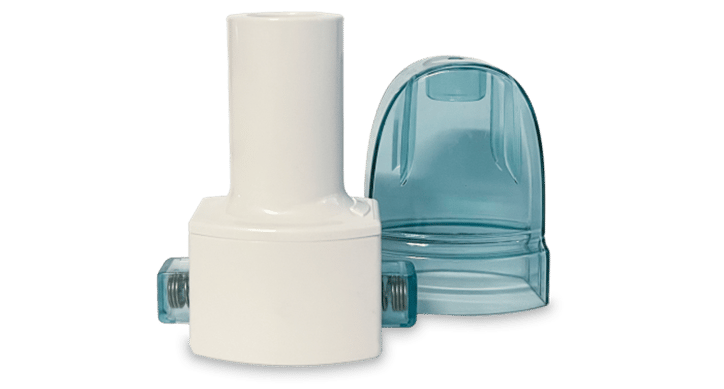
The RS01 capsule inhaler
In June 2019, the FDA issued a Complete Response Letter (CRL), meaning that the application could not be approved in its submitted form. The principal outstanding issue concerned the human-factors validation of the Bronchitol Tolerance Test, which healthcare professionals must administer before prescribing the treatment.
The FDA concluded that the submitted studies had not adequately demonstrated that healthcare professionals could perform the test reliably. The applicant was required to revise the user instructions and conduct further human-factors validation.
The FDA's concerns were specific to the administration of the tolerance test, rather than the RS01 inhaler itself. The agency did not conclude that the device was unsuitable for patient use, but it required further evidence that healthcare professionals could administer the test safely and reliably with RS01.
Read the FDA's Complete Response Letter, June 2019
Bronchitol subsequently received FDA approval in October 2020. The FDA's published human-factors review provides an unusually detailed account of the practical difficulties encountered when using this (and potentially other) cDPIs.
Among the observations were the following use errors:
- Users failed to release the capsule-piercing buttons before inhalation,
- Users had difficulty recognising when a capsule had not been pierced correctly,
- Users failed to check whether powder remained in the capsule after use.
Reviewers also identified an issue with the inhaler's relatively small size in the context that a user's hand could obscure the piercing buttons, making it difficult for a healthcare professional to confirm whether they had been released (and that the device had been used correctly).
Some of these problems were attributed partly to the simulated nature of the study. The FDA ultimately accepted the applicant's risk mitigations and residual risks.
The review nevertheless shows how apparently straightforward user steps can become sources of dosing error in the hands of actual device users.
Read the FDA Human Factors Review, October 2020.
What’s the problem with old inhaler technology?
An established inhaler may appear to be a low-risk option for DPI product developers, particularly when it has already been used successfully in marketed medicines. Its history provides useful evidence to support this, but regulatory approval is granted to a particular drug-device combination which will bring some element of novelty through its own formulation, intended user population, dosing regimen, and instructions for use. It is therefore important to consider whether the utility of these cDPIs is truly applicable to a particular medication.
To explore these concerns in more detail, most cDPIs require patients to remove a capsule from its packaging, remove the inhaler’s cap, open the inhaler’s mouthpiece, place the capsule into the inhaler, close the mouthpiece, pierce the capsule, inhale through the device, check for residual powder and repeat the inhalation steps if necessary. This whole sequence may also be repeated several times according to the drug’s required dosing regimen.

A study found that older participants using the cDPI made significantly more critical errors, despite generally considering cDPIs easy to use.
Like any use sequence, each of these operations introduces an opportunity for misunderstanding, confusion, and error. A published study comparing a cDPI with a multidose DPI found that older participants using the cDPI made significantly more critical errors, despite generally considering cDPIs easy to use. The particular devices and study participants should be considered when interpreting these findings. However, the results further demonstrate that an inhaler which is long established on the market and may easily be perceived on the surface as easy to use does not necessarily result in fewer use errors or meet the needs of all user groups or therapeutic applications.
Be careful with your assumptions
The inhaler is often selected early on during formulation development when aerosol performance, dose delivery and quick and easy access to a delivery device are the immediate priorities. RS01 is an understandable choice because developers can start to generate useful data to derisk and progress their project without investing in a bespoke delivery system.
However, it is risky to assume the ‘laboratory inhaler’ will become the commercial device without adequately considering the intended patient population and dosing regimen. Also consider that available technology like RS01 is only minimally configurable (e.g. devices available with different resistances and capsule sizes) so any changes required to address poor performance in clinical studies or feedback from regulators may not be possible with these design constraints. Furthermore, usability engineering, packaging, labelling and instructions for use are part of the regulatory submission. If shortcomings are identified during validation studies, addressing them may require additional studies, device design and/or packaging changes, with associated costs and programme delays.
The Bronchitol example demonstrates the potential consequences of these issues arising late on in a project. By itself it does not confirm that capsule inhalers are unsuitable for commercial use, but as it happened approximately 7 years ago it should be seen as a warning shot to the industry, particularly in light of the particular needs of next generation therapies.
Eye on the prize: choose an inhaler that is right for the therapy
The development of inhaled biologics, peptides and other emerging therapies is introducing new requirements for delivery devices. These medicines can require higher powder payloads, contain expensive active ingredients and dosing requirements that differ considerably from conventional respiratory therapies. These considerations only compound concerns about incomplete dose delivery, complicated user steps, multiple capsules taken per dose, so device selection needs to be even more carefully considered for the next wave of orally inhaled therapies.
Capsule inhalers have served the industry well, and they remain valuable tools for formulation research and development. However, it will be short sighted to not challenge whether they are still appropriate bearing in mind they are a 40+ year old technology present in the fast-changing landscape of orally inhaled therapies. It is now more important than ever to consider whether they are really suitable for commercial use with these next generation medicines.
In summary, when it comes to choosing a device, don’t kick the can down the road! Developers need to have these long horizon requirements in view and carefully consider a device for early formulation work, rather than leaving the question of commercial suitability until the clinical programme is well underway.
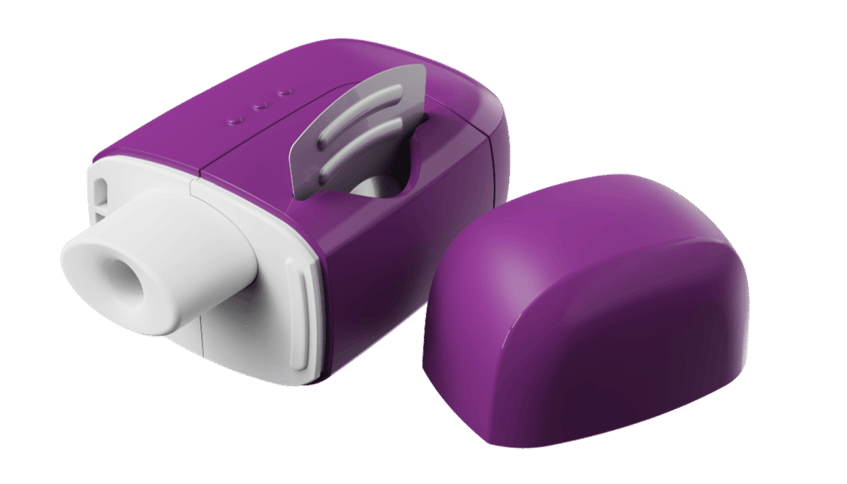 The Quattrii dry powder inhaler platform uses sealed foil blisters instead of capsules
At CHI, our approach has been to address these questions at the start of device development. The Quattrii dry powder inhaler platform uses sealed foil blisters instead of capsules, removing the need for patients to handle and pierce individual capsules (as well as offering moisture protection right up to the point of use). This approach is intended to simplify dose preparation while accommodating the larger powder payloads increasingly required for inhaled biologics and other emerging therapies.
Quattrii devices are available for pre-clinical evaluation as devices made from medical grade moulded plastics, along with convenient ‘easy seal’ blisters to support rapid lab testing. The Quattrii clinical devices are also available for clinical trials with support for small-scale blister forming, filling, and sealing available.
To learn more, email quattrii@chi.uk
